Back-office without the manual routine
AI CRM keeps data and processes in one stack, Voice AI calls and notifies on its own, and routine requests close without an agent. The team works with people, not busywork.
Connects to your systems and telephony. Role-based access and audit logs.
How does AI automate back-office and operations work?
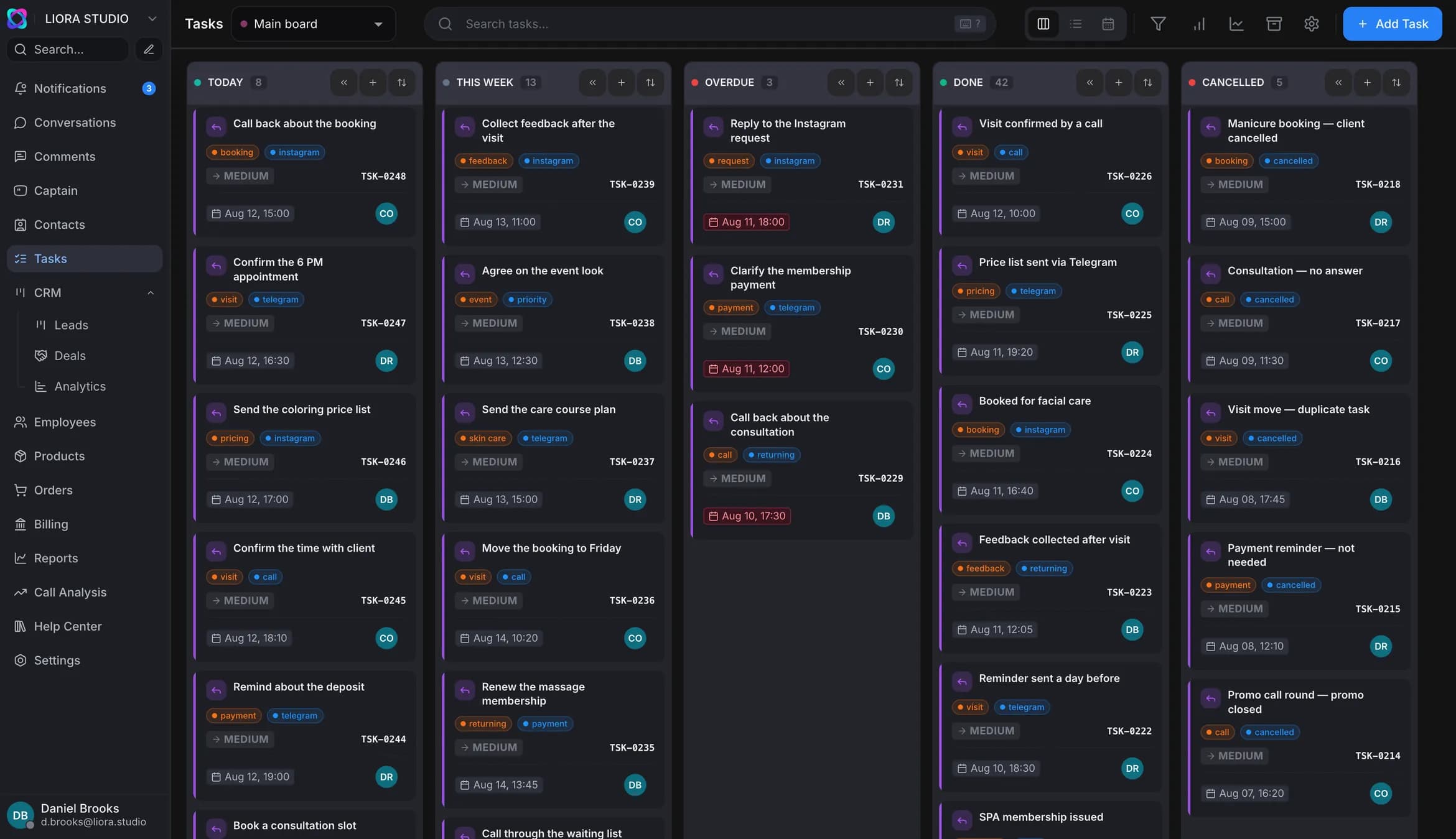
AI CRM gathers back-office processes into one loop: requests, tasks, statuses and deadlines are visible on a shared board. Voice AI calls and notifies customers on its own, routine requests close without an agent, and every action is written to audit logs, with role-based access and masking of personal data.
Routine eats the team’s time
Statuses, documents and routine questions take hours from people who could be solving hard problems.
Data scattered across systems
Information lives in different sheets and services — collecting and reconciling it takes longer than the work itself.
Manual notifications and calls
Staff call and message about statuses and reminders by hand — slow, uneven and with things slipping through.
No single control of processes
Without a shared picture it is unclear where the bottleneck is: processes are opaque and errors surface after the fact.
What does AI take off an operations team?
AI CRM
Unified data and automation of process steps — with no manual transfer between systems.
Voice AI
Outbound notifications, reminders and calls by voice — without a staff member.
Inbox AI
Routine internal and external requests close 24/7 across every channel.
Call Analytics
QA on 100% of process calls and discovery of bottlenecks.
Security
Role-based access, audit logs and transparency of every action by default.
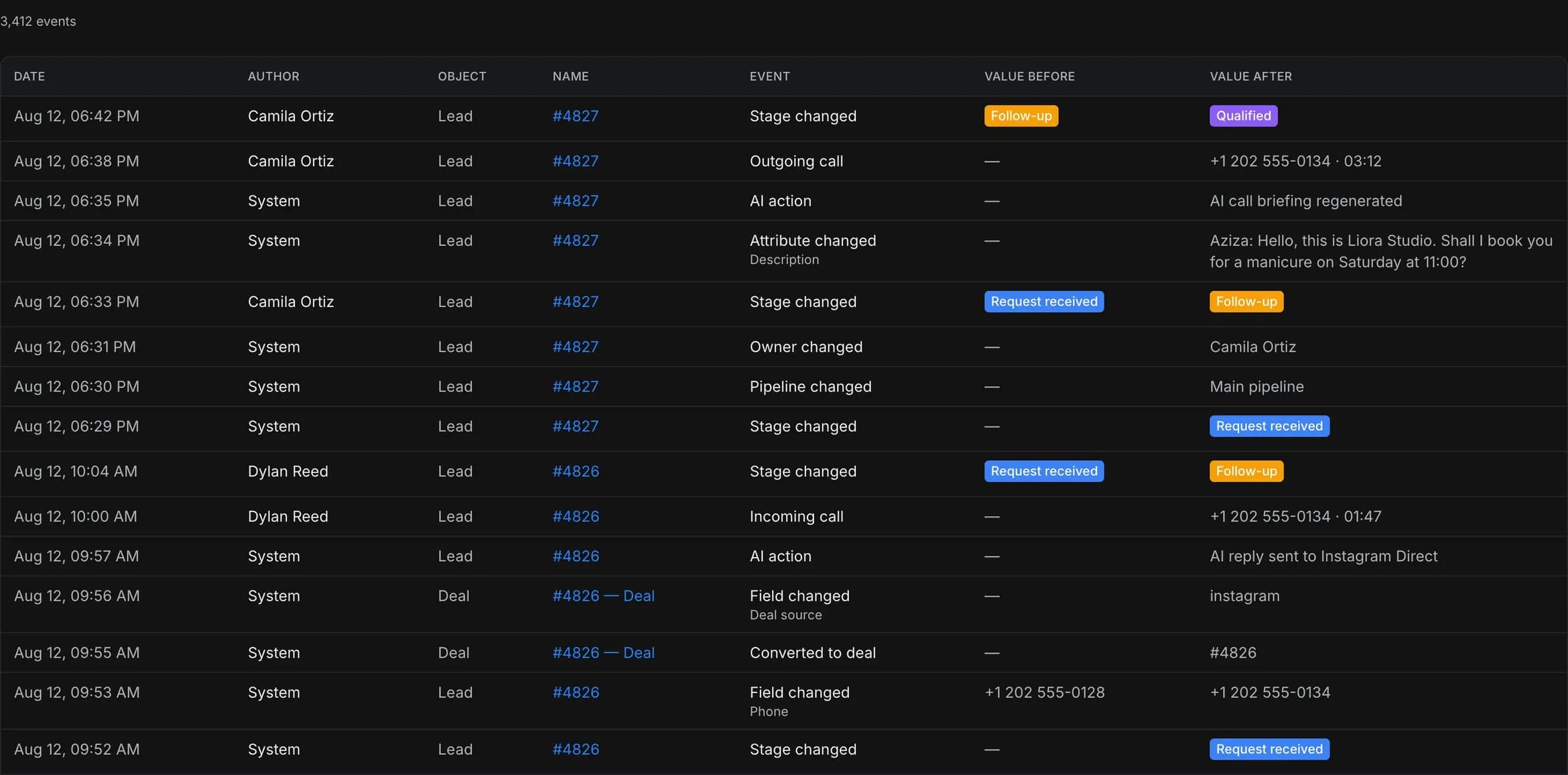
The operations loop on the Zukko.AI platform is built like this. AI CRM keeps tasks and processes on one board: the request, the owner, the deadline and the status are visible to the whole team instead of living inside a chat thread. Automations execute rules without a person — create a task, change a status, send a notification, set a reminder — so a step is never skipped because someone forgot. Voice AI calls customers for confirmations, reminders and surveys and returns the outcome to the card. Data is not reconciled by hand: integrations with 1C, ERP, telephony and CRM keep one source of truth. Control is built in: role-based access, audit logs for every action and scoring of process calls. An SMB scenario launches from 2 hours; an enterprise setup with ERP and on-premise deployment takes up to 30 days.
What changes in the back office once AI is live?
Plugs into your stack
- 1C
- ERP
- Telephony (any PBX)
- Notifications
- CRM
- Spreadsheets
- Telegram
- Web
Connects to your systems via API — processes are automated without rewriting the stack.
Frequently asked
Which back-office processes can be automated?
Routine customer and employee requests, order and request statuses, notifications and reminders, confirmation calls, opening and closing tasks, and reconciling data between systems. Decisions that need human judgement stay with the team: the AI prepares the context and hands the task to an owner with the full history.
Does the platform integrate with 1C and our systems?
Yes. It connects to 1C, ERP, telephony and CRM through the API: reference data, statuses and documents sync to your setup, and telephony works with any PBX. You do not need to rewrite existing systems — automations are configured on top of what already runs.
How safe is this for internal data?
Access is role-based, every action is written to audit logs, and personal data is masked by default. For regulated data an on-premise deployment inside your own perimeter is available, and the list of integrations and role permissions is agreed during the security review.
Which languages does Voice AI work in?
Uzbek, Russian and English, in voice, with the language switching inside a single call. The customer answers in their own language, and the outcome returns to the card as text: a transcript, a summary and the next step. No extra per-language configuration is required.
How do we see where a process gets stuck?
Every task and every call stays in the system with a date, an owner and a status, so overdue items and stalled stages appear on the board the moment they occur, not in a report a month later. Call analytics adds the reasons behind repeat requests.
How long does it take to launch AI in operations?
You launch the SMB scenario yourself: describe the process, connect the channels and switch on the automation rules — from 2 hours to the first automatic task. An enterprise setup with ERP integration, role-based access and on-premise deployment takes up to 30 days, including the security review.
Launch AI in your operations
We will show a demo on your processes — routine requests, notifications and unified data with control and audit logs.
Connects to your systems. Role-based access and audit logs.